
Your IT team is losing 35% of its capacity to manual work


The average IT team loses 35% of its working time to manual, repetitive tasks. Not complex troubleshooting or strategic projects. Routine, low-value work that’s well below their skill level and doesn’t move the needle.
For IT managers and directors, that’s not just a productivity statistic. It’s the gap between the team you have and the team you need.
How much time do IT teams spend on manual tasks?
Our research surveyed 718 IT professionals, and the breakdown is stark. Almost one in four respondents (24%) spend between 40 and 60% of their working day on manual, repetitive tasks. A further 10% spend more than 60% of their time this way.
Some of your people are coming in every day and spending most of their hours on ticket sorting, manual onboarding steps, and copy-paste reporting. None of that requires their expertise. All of it competes with the work that does. And it affects organizations of every size. This is a process problem, not a resource one.
Urgent tasks crowd out the work that would actually fix things
Manual work persists because it rarely feels optional in the moment. Every ticket needs a response. Every new hire needs to be onboarded. Every report needs filing. Because these tasks feel immediate, they take priority over the harder work of redesigning the process generating them.
The result is a team that’s always busy but rarely gets ahead. As IT environments grow with more applications, users, and endpoints, the volume of routine work scales up accordingly.
The processes for handling it don’t.
For managers, this creates a compounding problem: the team is visibly stretched, but quantifying exactly how much capacity is being lost to automatable work is difficult without the right data. And without that data, making the case for change is harder than it should be.
Poor visibility makes the problem harder to solve
Running alongside the efficiency leak is a visibility gap that compounds it. Only 10% of organizations have full transparency into their software ecosystem. The other 90% are managing environments they can’t fully see: applications that may or may not still be in use, licenses that may or may not be needed, contracts approaching renewal with no one tracking them.
Half of the respondents (50%) report poor software usage visibility. Nearly half (47%) flag it as a security risk. And 39% are paying for redundant or unused licenses. For a manager planning for the year or justifying a budget, operating without this visibility is a real handicap.
The teams closing the gap are starting with consolidation
Nearly 40% of IT organizations say tool consolidation is a top strategic priority for 2026. This isn’t primarily a cost-cutting move—it’s a capability one. When data is spread across disconnected systems, automation is very difficult to deploy effectively. A unified foundation is what makes intelligent tooling possible.
The organizations making the most progress on the efficiency leak aren’t working harder. They’ve simplified their environments first, then built automation on top.
The 35% of capacity lost to manual work isn’t inevitable. But it won’t fix itself either.
Download the State of Service Management 2026 report for the full data on where IT capacity is going, and how high-performing teams are taking it back.
Did you find this interesting?Share it with others:
Did you find this interesting? Share it with others:
Why your audit trail is only as strong as your change management
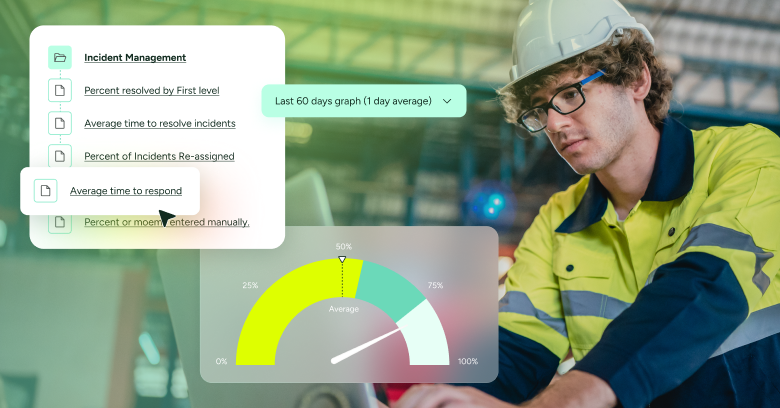
Incident management for manufacturing: the cost every minute the line is down

Why manufacturing floor issues never become IT tickets

Confront shadow IT with the SysAid Browser Extension

IT burnout is at a breaking point, and we have the numbers to prove it.

Shadow IT is quietly breaking your software license compliance and your security posture